Maths


Mathematics
The national curriculum for mathematics aims to ensure that all pupils:
- become fluent in the fundamentals of mathematics, including through varied and frequent practice with increasingly complex problems over time, so that pupils develop conceptual understanding and the ability to recall and apply knowledge rapidly and accurately.
- reason mathematically by following a line of enquiry, conjecturing relationships and generalisations, and developing an argument, justification or proof using mathematical language
- can solve problems by applying their mathematics to a variety of routine and non-routine problems with increasing sophistication, including breaking down problems into a series of simpler steps and persevering in seeking solutions.
Mathematics is an interconnected subject in which pupils need to be able to move fluently between representations of mathematical ideas. The programmes of study are, by necessity, organised into apparently distinct domains, but pupils should make rich connections across mathematical ideas to develop fluency, mathematical reasoning and competence in solving increasingly sophisticated problems. They should also apply their mathematical knowledge to science and other subjects.


Maths in KS1:
-

Rolling a dice to find 1 more or less.
-

Teen number Bingo!
-

Making amounts using various coins.
-

Representing numbers in various ways.
-

Investigating odd and even numbers.
-

Active maths! Collecting coins to make totals.
-

Getting to know numbers through active maths!
-

How do you make 13?
-

Bigger or smaller than a metre?
-

Measuring length using various objects.
-

Using a metre stick.
-

Getting to know the vocabulary of measuring length.
-

Creating 2D shapes with Geo Boards.
-

What 2D shapes make the faces of a 3D shape?
-

Discovering symmetry.
-

Making 2D shapes with sticks from the playground.
-

I made a rectangle!
-

Sorting 3D shapes.
-

How many sides on a 2D shape?
-

Making a train with 3D shapes.
-

2D shape.
-

Which 3D shapes make the best towers and why?


maths


Maths in LKS2:
-

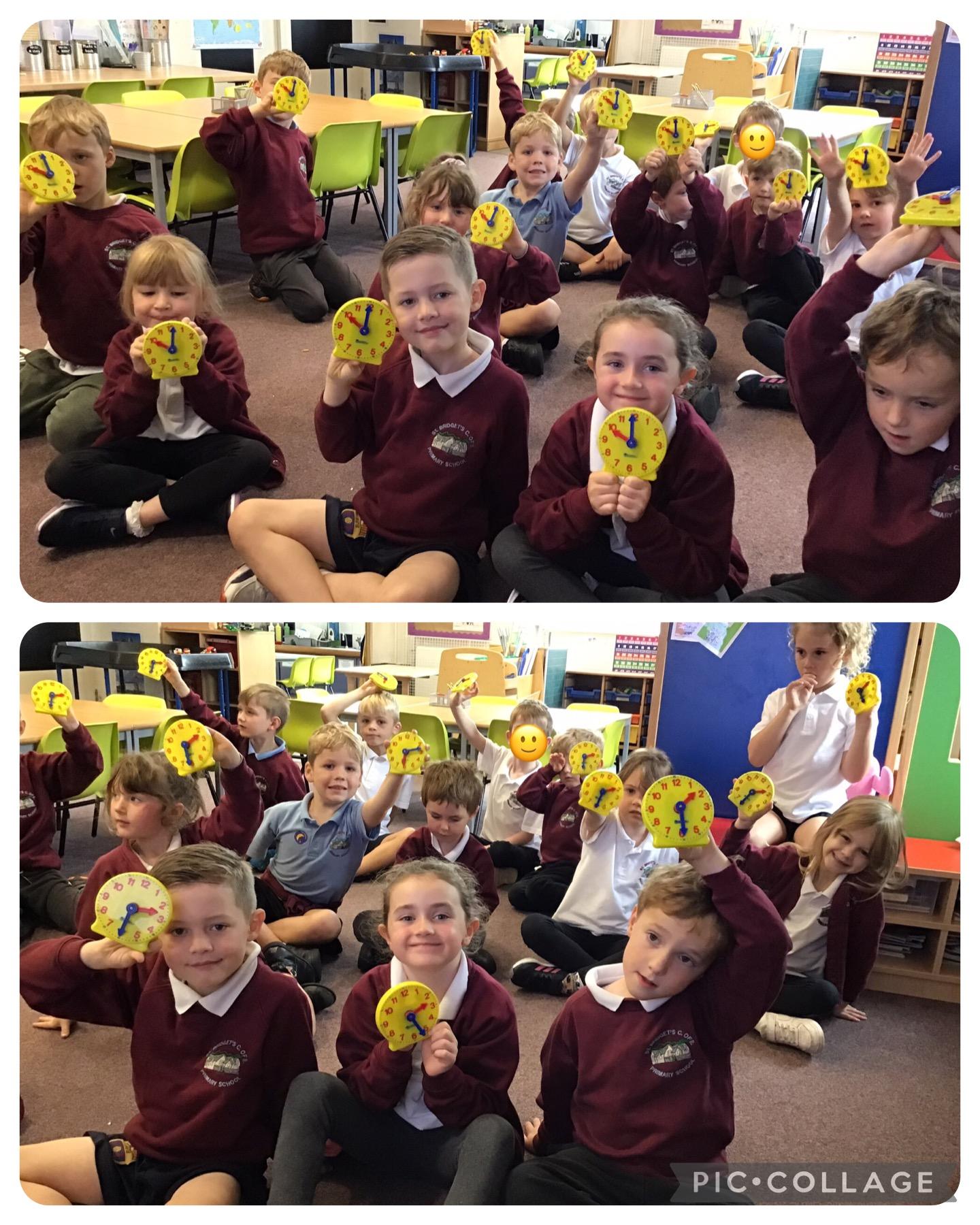
Learning to tell the time to the minute
-

Solving problems with time
-

Measuring mass in grams
-

Measuring in meters and centimeters on Science Day
-

Recognising and describing 2D and 3D shapes in Active Maths
-

Identifying and comparing triangles in active Maths
-

Emilie Times Table Competition
-

Measuring in meters and centimetres
-

Measuring in centimetres and millimetres
-

Representing numbers to 1000
-

Partitioning numbers to 100
-

Representing numbers to 100
-

Times Table Practice- Domino's
-

Adding 1s across 10
-

Adding two numbers without exchanging
-

England Rocks
-

Finding equivalent fractions


