Our Curriculum Design
St Bridget’s CE Primary School’s Curriculum Design
Curriculum Intent
At St Bridget’s CE Primary School our school vision of 'Your word is a lamp to our feet and a light to our path' helps us to provide an inclusive and broad and balanced curriculum to ensure children acquire essential skills and knowledge in order to reach their full potential. In addition, our curriculum is enriched by the drivers we feel are important to us as individuals, our school, our community and the wider world in which we live, to prepare children for their today and tomorrow.
In addition to the National Curriculum our drivers are :
- As a church school our vision and values, firmly rooted in Christian teachings, underpin everything we do.
- As individuals, encouraging resilience through healthy minds and bodies to face challenges and to cope with pressures in society as we go through each stage of our lives.
- As a community, to provide opportunities to develop self confidence and leadership skills to a range of audiences.
- As a small rural school, we endeavour to foster a love of the local area and all it has to offer, providing opportunities for outdoor and adventurous activities, and inspiring creativity from the natural environment.
- As part of the wider community, we equally need to understand and respect the rich and diverse world in which we live, as well as fostering the responsibility to care about the world God created, ensuring sustainability for our own and future generations.
Curriculum Implementation
Our Vision and Christian Values
Our vision of 'Your word is a lamp to my feet and a light to my path' is taught through our Christian Values on a 3 year rolling programme, they form the basis of Collective Worship and are fully integral to all our daily lives, how we teach and what our children learn. They empower our children to develop their spirituality and guide them in personal development as effective learners and good citizens.
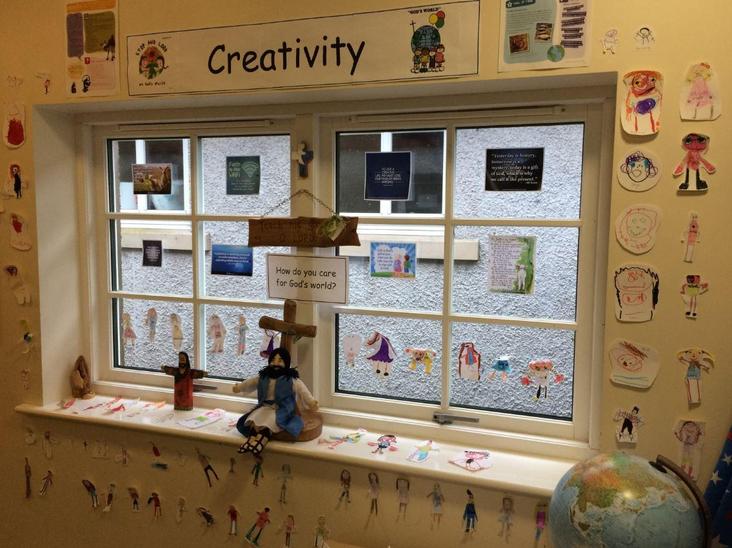
Our values are: Generosity, Compassion, Courage, Forgiveness, Friendship, Respect, Thankfulness, Trust, Perseverance, Justice, Service, Truthfulness, Wisdom, Peace, Creativity, Hope, Humility, Responsibility.
Health and Well Being
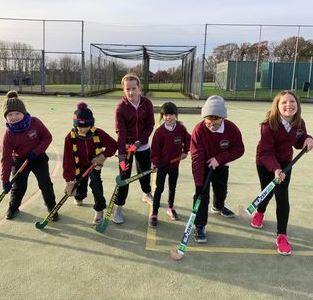
As well as teaching PE & PSHCE, we employ a large range of sports coaches for all ages to encourage children to try out different activities not only for exercise and fitness levels but to find one that may suit their interests as individuals. In addition, children learn about healthy eating/cooking and personal hygiene.
As well as a healthy body children are taught about healthy minds- they are encouraged to have an ‘I can do’ attitude using the principles of Growth Mindset. For children who struggle with mental health and anxiety, we offer pastoral support through staff members as well as specialists who are employed to deliver bespoke programmes such as play therapy and counselling etc.
Self Confidence and Courageous Advocacy
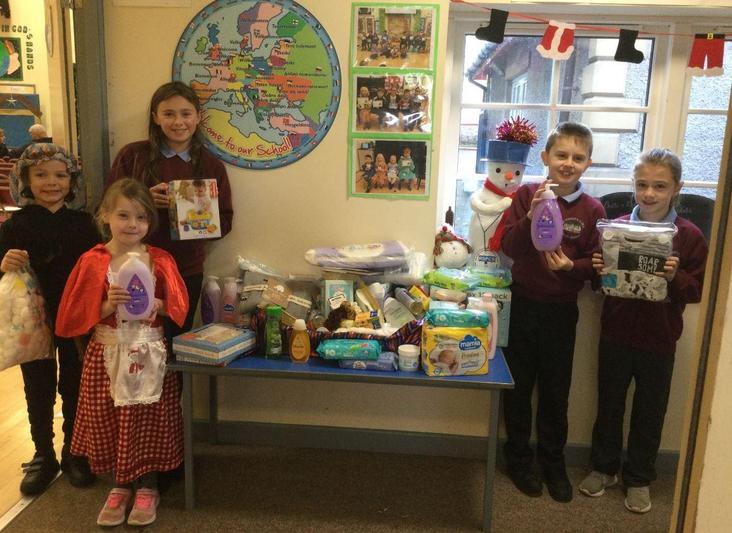
We develop confidence, self belief and leadership skills through creative and performing arts opportunities throughout the school year. Children take part in accredited Leadership awards, gaining recognition and building on the skills they have achieved. All year groups adopt roles and responsibilities throughout school initially from Classroom Leader of the day to Playground Eyes, Nursery Key workers, Office Duty etc as they get older. In addition, children frequently plan and deliver Collective worship and lead charitable enterprise in order to become courageous advocates for change in their local, national and global communities.
Local Area
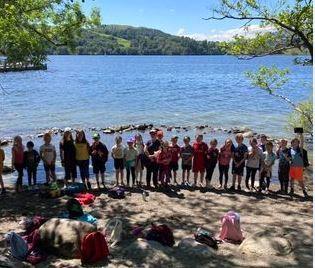
We offer a wide range of outdoor and adventurous activities for our children from parks and forest schools in Early Years through to fell walking, orienteering, rock climbing, canoeing, and local attractions. These are provided through day trips and residential on a rolling programme as well as bringing learning to life in other subjects such as rowing Viking Long Boats in History on Derwent Water.
As we are surrounded by lakes and seas and rivers we ensure all children meet the minimum requirement for swimming and deliver swimming programmes from Year 1 to Year 6 so they can enjoy our environment safely. It also encourages children to become good stewards and look after the world God created for us.
Wider Community
Living in a rural area it is essential we provide children with wider opportunities in contrast to what we have on our doorstep, we do this through residential and day trips to cities, museums, places of worship and resource centres.
We equip children with skills and knowledge to be Global citizens through work with Christian Aid resources eg. looking at global justice and poverty. Visitors to schools such as African & Chinese dancers, drummers provide opportunities to experience different cultures and traditions first hand.
Through programmes such as Newsbytes children are aware of national and environmental issues and focus particularly on climate change and how compassion leads to action in caring and sustaining the present and future world.
Impact
St Bridget’s children leave our school secondary ready for their next stage of education as healthy, well rounded individuals. Our vision and Christian values enable them to appreciate the diverse world in which we live by showing respect to people and their differences and helps them to make the right choices in life.
Our Curriculum is based largely on the National Curriculum below. To look at how we adapt and implement this, please visit each subject area on our website.
Relgious Education
Art & Design
The national curriculum for art and design aims to ensure that all pupils:
- produce creative work, exploring their ideas and recording their experiences
- become proficient in drawing, painting, sculpture and other art, craft and design techniques
- evaluate and analyse creative works using the language of art, craft and design
- know about great artists, craft makers and designers, and understand the historical and cultural development of their art forms.
Design & Technology
The national curriculum for design and technology aims to ensure that all pupils:
- develop the creative, technical and practical expertise needed to perform everyday tasks confidently and to participate successfully in an increasingly technological world
- build and apply a repertoire of knowledge, understanding and skills in order to design and make high-quality prototypes and products for a wide range of users
- critique, evaluate and test their ideas and products and the work of others
- understand and apply the principles of nutrition and learn how to cook.
Music
The national curriculum for music aims to ensure that all pupils:
- perform, listen to, review and evaluate music across a range of historical periods, genres, styles and traditions, including the works of the great composers and musicians
- learn to sing and to use their voices, to create and compose music on their own and with others, have the opportunity to learn a musical instrument, use technology appropriately and have the opportunity to progress to the next level of musical excellence
- understand and explore how music is created, produced and communicated, including through the inter-related dimensions: pitch, duration, dynamics, tempo, timbre, texture, structure and appropriate musical notations.
Computing
The national curriculum for computing aims to ensure that all pupils:
- can understand and apply the fundamental principles and concepts of computer science, including abstraction, logic, algorithms and data representation
- can analyse problems in computational terms, and have repeated practical experience of writing computer programs in order to solve such problems
- can evaluate and apply information technology, including new or unfamiliar technologies, analytically to solve problems
- are responsible, competent, confident and creative users of information and communication technology.
Geography
The national curriculum for geography aims to ensure that all pupils:
- develop contextual knowledge of the location of globally significant places – both terrestrial and marine – including their defining physical and human characteristics and how these provide a geographical context for understanding the actions of processes
- understand the processes that give rise to key physical and human geographical features of the world, how these are interdependent and how they bring about spatial variation and change over time
- are competent in the geographical skills needed to:
- collect, analyse and communicate with a range of data gathered through experiences of fieldwork that deepen their understanding of geographical processes
- interpret a range of sources of geographical information, including maps, diagrams, globes, aerial photographs and Geographical Information Systems (GIS)
- communicate geographical information in a variety of ways, including through maps, numerical and quantitative skills and writing at length.
History
The national curriculum for history aims to ensure that all pupils:
- know and understand the history of these islands as a coherent, chronological narrative, from the earliest times to the present day: how people’s lives have shaped this nation and how Britain has influenced and been influenced by the wider world
- know and understand significant aspects of the history of the wider world: the nature of ancient civilisations; the expansion and dissolution of empires; characteristic features of past non-European societies; achievements and follies of mankind
- gain and deploy a historically grounded understanding of abstract terms such as ‘empire’, ‘civilisation’, ‘parliament’ and ‘peasantry’
- understand historical concepts such as continuity and change, cause and consequence, similarity, difference and significance, and use them to make connections, draw contrasts, analyse trends, frame historically-valid questions and create their own structured accounts, including written narratives and analyses
- understand the methods of historical enquiry, including how evidence is used rigorously to make historical claims, and discern how and why contrasting arguments and interpretations of the past have been constructed
- gain historical perspective by placing their growing knowledge into different contexts, understanding the connections between local, regional, national and international history; between cultural, economic, military, political, religious and social history; and between short- and long-term timescales.
Physical Education
The national curriculum for physical education aims to ensure that all pupils:
- develop competence to excel in a broad range of physical activities
- are physically active for sustained periods of time
- engage in competitive sports and activities
- lead healthy, active lives
Languages
The national curriculum for languages aims to ensure that all pupils:
- understand and respond to spoken and written language from a variety of authentic sources
- speak with increasing confidence, fluency and spontaneity, finding ways of communicating what they want to say, including through discussion and asking questions, and continually improving the accuracy of their pronunciation and intonation
- can write at varying length, for different purposes and audiences, using the variety of grammatical structures that they have learnt
- discover and develop an appreciation of a range of writing in the language studied.
Science
The national curriculum for science aims to ensure that all pupils:
- develop scientific knowledge and conceptual understanding through the specific disciplines of biology, chemistry and physics
- develop understanding of the nature, processes and methods of science through different types of science enquiries that help them to answer scientific questions about the world around them
- are equipped with the scientific knowledge required to understand the uses and implications of science, today and for the future.
English
The overarching aim for English in the national curriculum is to promote high standards of language and literacy by equipping pupils with a strong command of the spoken and written word, and to develop their love of literature through widespread reading for enjoyment.
The national curriculum for English aims to ensure that all pupils:
- read easily, fluently and with good understanding
- develop the habit of reading widely and often, for both pleasure and information
- acquire a wide vocabulary, an understanding of grammar and knowledge of linguistic conventions for reading, writing and spoken language
- appreciate our rich and varied literary heritage
- write clearly, accurately and coherently, adapting their language and style in and for a range of contexts, purposes and audiences
- use discussion in order to learn; they should be able to elaborate and explain clearly their understanding and ideas
- are competent in the arts of speaking and listening, making formal presentations, demonstrating to others and participating in debate.
Mathematics
The national curriculum for mathematics aims to ensure that all pupils:
- become fluent in the fundamentals of mathematics, including through varied and frequent practice with increasingly complex problems over time, so that pupils develop conceptual understanding and the ability to recall and apply knowledge rapidly and accurately.
- reason mathematically by following a line of enquiry, conjecturing relationships and generalisations, and developing an argument, justification or proof using mathematical language
- can solve problems by applying their mathematics to a variety of routine and non-routine problems with increasing sophistication, including breaking down problems into a series of simpler steps and persevering in seeking solutions.
Mathematics is an interconnected subject in which pupils need to be able to move fluently between representations of mathematical ideas. The programmes of study are, by necessity, organised into apparently distinct domains, but pupils should make rich connections across mathematical ideas to develop fluency, mathematical reasoning and competence in solving increasingly sophisticated problems. They should also apply their mathematical knowledge to science and other subjects.